With Anthropic a few months from a Nasdaq listing, two kinds of stories are circulating at once. One is verifiable numbers from regulatory filings and valuations. The other is online character sketches of CEO Dario Amodei. Read the two together and you get heat from the debate while the facts disappear. This post separates what has been cross-checked from what rests on a single source.
Why Social Media Got Loud Before the IPO
It started with warnings Amodei has repeated. He has said more than once that AI could push unemployment up to 20%, that 30–40% of current work could be automated by 2030, and that up to half of entry-level white-collar jobs in IT, finance, law, and consulting could disappear within one to five years. Industry figures, including Jensen Huang, called those statements "cheap marketing." Amodei fired back directly, saying the claim that this is cheap marketing is itself cheap marketing.
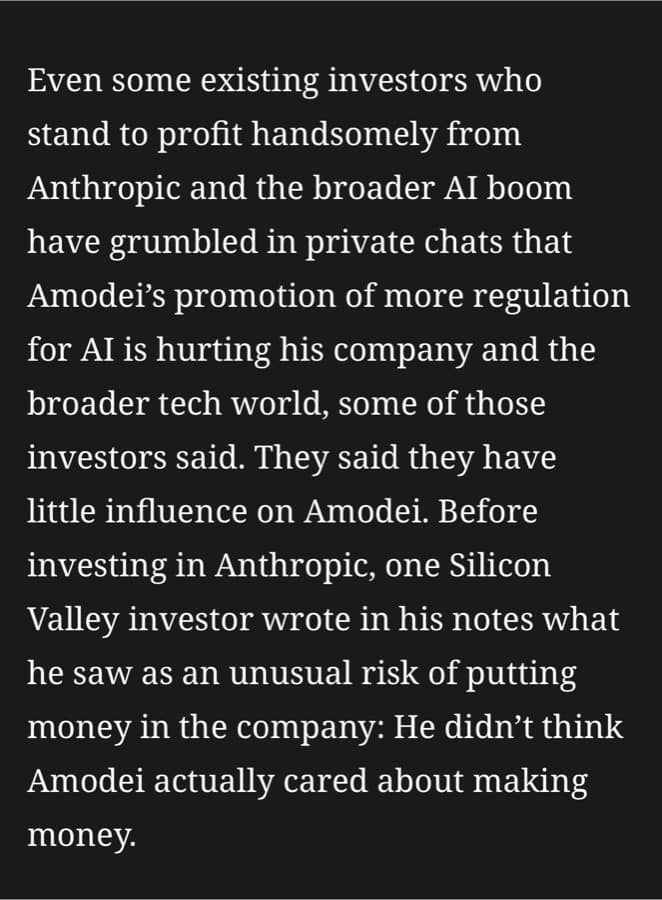
Because that exchange overlaps with the IPO timing, a different kind of worry has surfaced in investor circles. One investment newsletter argued that Amodei's "doom"-style messaging has become a burden just ahead of the listing. When a CEO's public statements bear directly on how much people trust the product, every remark made while an IPO review and investor pitch are both underway gets read more heavily than usual.
From a Confidential S-1 to a $965 Billion Valuation, the Clock Is Already Running
Anthropic confidentially filed an S-1 with the SEC on June 1, 2026, and the market is talking about a Nasdaq listing around October 23 of that year. The valuation set in the latest round was reported at $965 billion, with an annualized revenue run rate of $47 billion. On the numbers alone it's an aggressive growth story, but the same report points out that the pace of the IPO push itself could be a warning sign for retail investors.
| Item | Details | Source status |
|---|---|---|
| Confidential S-1 filing | June 1, 2026, with the SEC | Cross-checked fact |
| Expected listing timing | Around October 23, 2026, Nasdaq | Cross-checked fact (market expectation) |
| Latest round valuation | $965 billion | Cross-checked fact |
| Annualized revenue (run rate) | $47 billion | Cross-checked fact |
| Anecdotes about Amodei (writing on an offline computer, etc.) | One X post | Unverified, single source |
As the table shows, the financial and schedule figures were reported by several outlets, while the anecdotal claims about Amodei as a person are a different kind of material. The next section covers that distinction in more detail.
Sounding the Alarm While Heading for an IPO?
For people who wire AI tools into real work, the interesting part of this debate isn't the valuation. It's that the tone of the warnings and the speed of business expansion are colliding inside the same company. A company that says automation could replace up to half of entry-level white-collar work also has to persuade public markets with a maximum-growth story. That contradiction is more than a PR dispute. It's a case study in how honestly, or strategically, an AI company discloses the impact of its own technology.
If you design workflow automation, you can treat these signals as a reference point for judging which tasks to bring into automation, and how fast. But a CEO's rhetoric and the actual model performance roadmap should be handled separately. Public statements from a company heading to IPO serve several goals at once: raising capital, handling regulators, and managing public opinion. Plugging the warning figures straight into operational decisions would be premature.
What's the Evidence for That Offline Anecdote?
From here on, the line needs to be clear. A post by X user ℏεsam (@Hesamation) drew 250,000 views and 1,500 likes. It described Amodei as "more of a religious leader than a CEO" and included specific stories such as "he wrote a sensitive OpenAI-related memo on an offline computer" and "he printed it out instead of using Google Docs." These are claims by the author of a single X thread, and a separate web search did not cross-check them.
In other words, the only things this article treats as fact are items that several outlets have reported: the SEC filing date, the valuation, the revenue figures, and Amodei's public statements along with the pushback to them. Anecdotes about Amodei's personal work habits or character deserve no more status than "a claim that is spreading." The investor-sentiment angle likewise needs to be read as one newsletter's interpretation. As the listing date approaches, unverified narratives like this are likely to be recycled even faster, so until follow-up reporting checks them, it's worth naming the source every time you cite them.