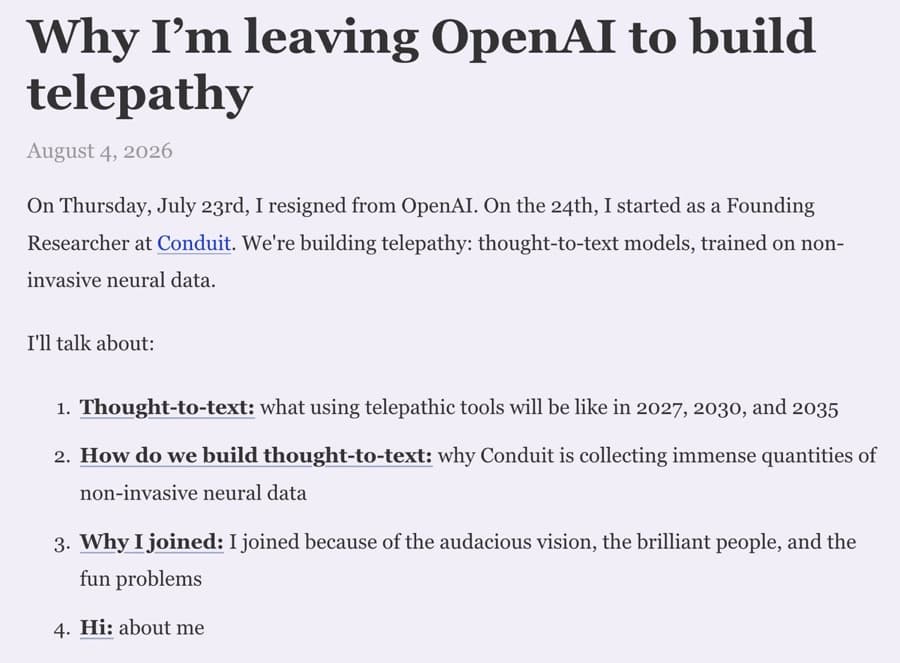
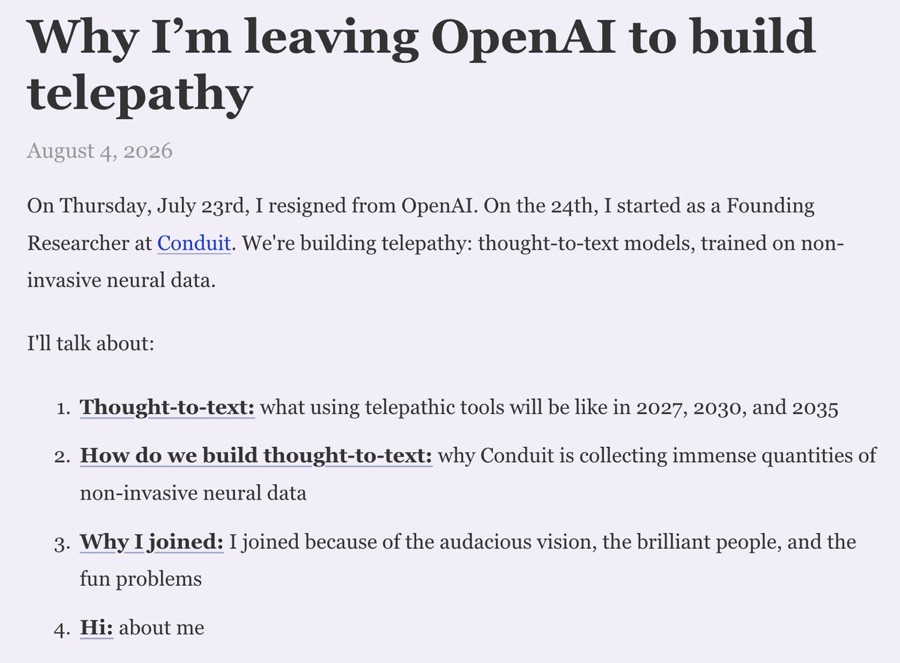
An observation has emerged that the AI industry's top talent is moving from artificial general intelligence (AGI) to brain-computer interfaces (BCI). Sequoia Capital partner Sonya Huang said, "5 to 10 years ago, San Francisco's top talent worked on AGI and alignment. Now they work on BCI."
Leaving AGI Behind: San Francisco Talent's Next Stop Is the Brain
Huang's remark reads as a signal that the flow of AI capital and talent is changing. In our last roundup, a startup reported that AI had decoded 45% of a stranger's thoughts from beyond the skull. This time, her comment confirms the same trend from the angle of talent movement.
Why BCI After AI: The Gap Between Body and Computer
1. AGI's "next question" leads to BCI. The smarter AI gets, the more "how do we interface with humans?" becomes the key issue. BCI, which connects directly to the brain, is the extreme form of that interface.
2. OpenAI researchers are heading to BCI startups. An OpenAI researcher joined the "mind-reading" startup we covered last time. The movement of top talent foreshadows the next stage of technology.
3. Investment follows. Capital gathers where talent moves. BCI is still early, but it is drawing attention as the next growth axis because talent proven in AI is moving in.
Why Talent Movement Doesn't Mean the Technology Is Ready
This observation is one person's opinion, not confirmed data. "Top talent is going to BCI" is a qualitative judgment, and the actual scale of any shift has not been confirmed by statistics. Still, taken together with our last roundup's BCI mind-reading story (540,000 views), the trend of BCI emerging as AI's next frontier is clear.
A Signal Pointing Beyond AGI: How Close Is BCI?
The AI industry's attention is shifting from building bigger models to connecting with humans. AGI is still unfinished, but the point of this remark is that top talent has already started moving toward the next problem.
Related: Reference X post · Sonya Huang