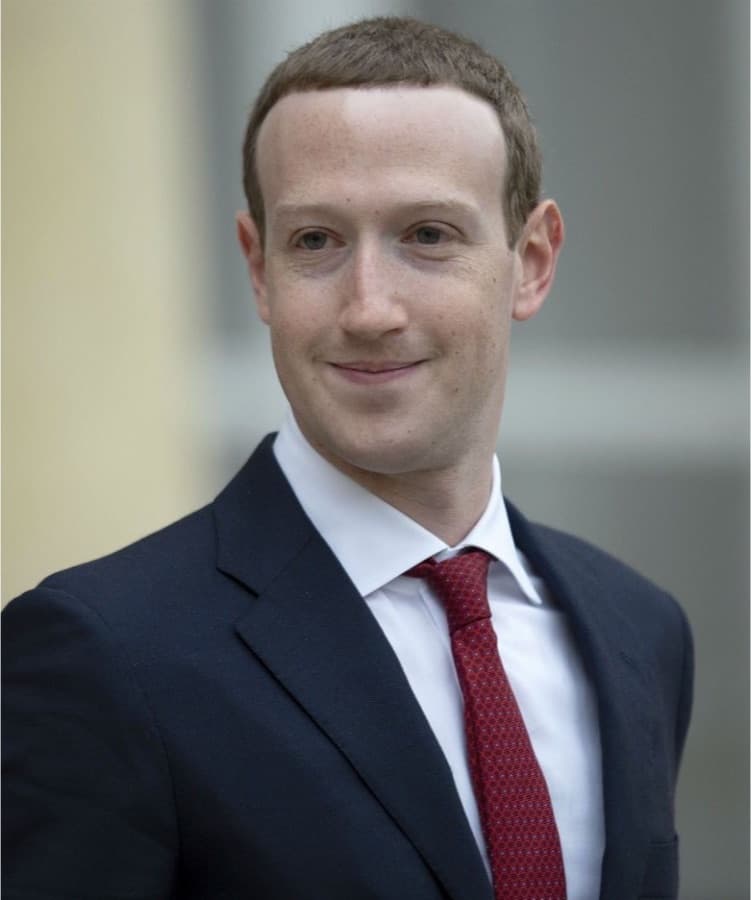
On August 10, 2026, Mark Zuckerberg posted an essay of about 6,500 words on Meta's official channel titled "The Future Is for Everyone." The key sentence is this: "Billions of people will have highly capable personal AI agents that understand all of their goals and interests." It nails down a 24/7 agent connected anywhere, anytime, on every device including glasses as the company's vision. The news spread immediately. The summary tweet posted by Watcher.Guru drew 420,000 views and spread across developer and marketer communities within a day. Major outlets like IBTimes UK followed with analyses of the full text.
The Event: Examples Zuckerberg Himself Gives, "An Agent Woven into Daily Life"
The use examples Zuckerberg gives personally in the essay stand out: flagging interesting information in advance, prototyping ideas together, monitoring sleep patterns, giving feedback on exercise training, and suggesting personalized recipes to cook with his daughter. These aren't grand narratives about industry transformation but concrete scenes of drawing an agent into one person's day. At the same time, he made a privacy pledge. He states that in "fully private mode," even Meta can't access user information or grant access to it, and compared this to WhatsApp's end-to-end encryption. This vision isn't limited to personal agents. It's closer to a declaration for Meta's whole AI strategy, covering business agents and app development support.
Context: Not the First Time He's Said It, a Blueprint Meta Has Repeated
Reading this essay as an entirely new statement misses the context. Zuckerberg has repeated similar remarks several times this year. On January 28 he mentioned "agentic commerce," sketching a future where AI handles shopping and transactions, and in a July 29 TechCrunch report he had already stated that "billions of people will have personal AI agents within five years." This 6,500-word essay is closer to the result of synthesizing those remarks into one document and polishing the narrative. That is, the direction was already known, and this time it was formalized as a brand manifesto. So it's more accurate to see this essay not as a startup pivot or surprise announcement but as the finished version of positioning Meta has been building for more than half a year.
A Personal AI Demands More Permissions
What to watch is what weapon Meta intends to use to push this vision. Apple competes on on-device privacy and its hardware ecosystem, Google on the accumulated context of its search and data graph, and OpenAI on model performance and its developer ecosystem. Meta's axis is different: platform coverage, meaning always-on connection across multiple devices including glasses, and a privacy positioning of "even Meta can't see it." It reads as a strategy for Meta, which has neither a search engine nor an app store, to use its social graph and glasses hardware as leverage to get around Apple's and Google's platform advantages.
| Player | Core weapon | Positioning |
|---|---|---|
| Meta | Always-on connection across multiple devices (including glasses) | Earns trust with a "fully private mode" |
| Apple | On-device processing, hardware ecosystem | Privacy by design |
| Search and data graph | Competes on accumulated context | |
| OpenAI | Model performance, developer ecosystem | The general intelligence frontier |
For studios and brands, what this trend suggests is clear. The moment an "agent that understands me" becomes standard, the baseline for customer experience design rises too. Micro-content and suggestions that respond to an individual's context (sleep patterns, fitness goals, tastes) are likely to become the expectation over uniform campaign messaging. And if the privacy narrative of "data even Meta can't see" becomes the new standard for consumer trust, brands take on the burden of designing personalization and privacy pledges together.
A Personal AI Promise Without Specs
But this essay isn't an execution roadmap. Detailed specs on exactly when and with what technology "fully private mode" will be implemented haven't been released. The comparison to WhatsApp's end-to-end encryption shows direction only, and how a personal AI agent would provide the same level of technical assurance is a matter that has to be verified separately. The tone also differs from outlet to outlet. 404 Media took a skeptical view of the essay as inflated superintelligence marketing, pointing out that the narrative runs ahead of the substance. For studios, rather than taking this vision at face value, it's safer to keep checking the gap between Meta's blueprint and the actual product until the real launch timing and technical verification results for "fully private mode" are published.