
Figma’s design agent is now generally available after leaving beta on October 6, 2026. The release includes updates such as file search, library guidelines, and live canvas collaboration with teammates’ agents. Usage now draws on Figma AI credits. Figma’s Workflow Lab is a sample workflow built around Offtrail, a fictional app—not a customer case study. It shows how an agent can handle bounded cleanup and synthesis while people keep product and policy decisions.
There’s more to this example than generating a screen. A designer is shaping temporary host access for events while the agent helps maintain selected frames, sort critique feedback, surface review questions, and draft a design-system proposal.
Start with the screens the feature depends on
Offtrail needs a way to give someone host permissions for one event, with access that expires afterward. Its existing permission screens mix current components and variables with outdated instances and values overridden by hand. The designer selects the frames the new flow will build on and connects the current library.
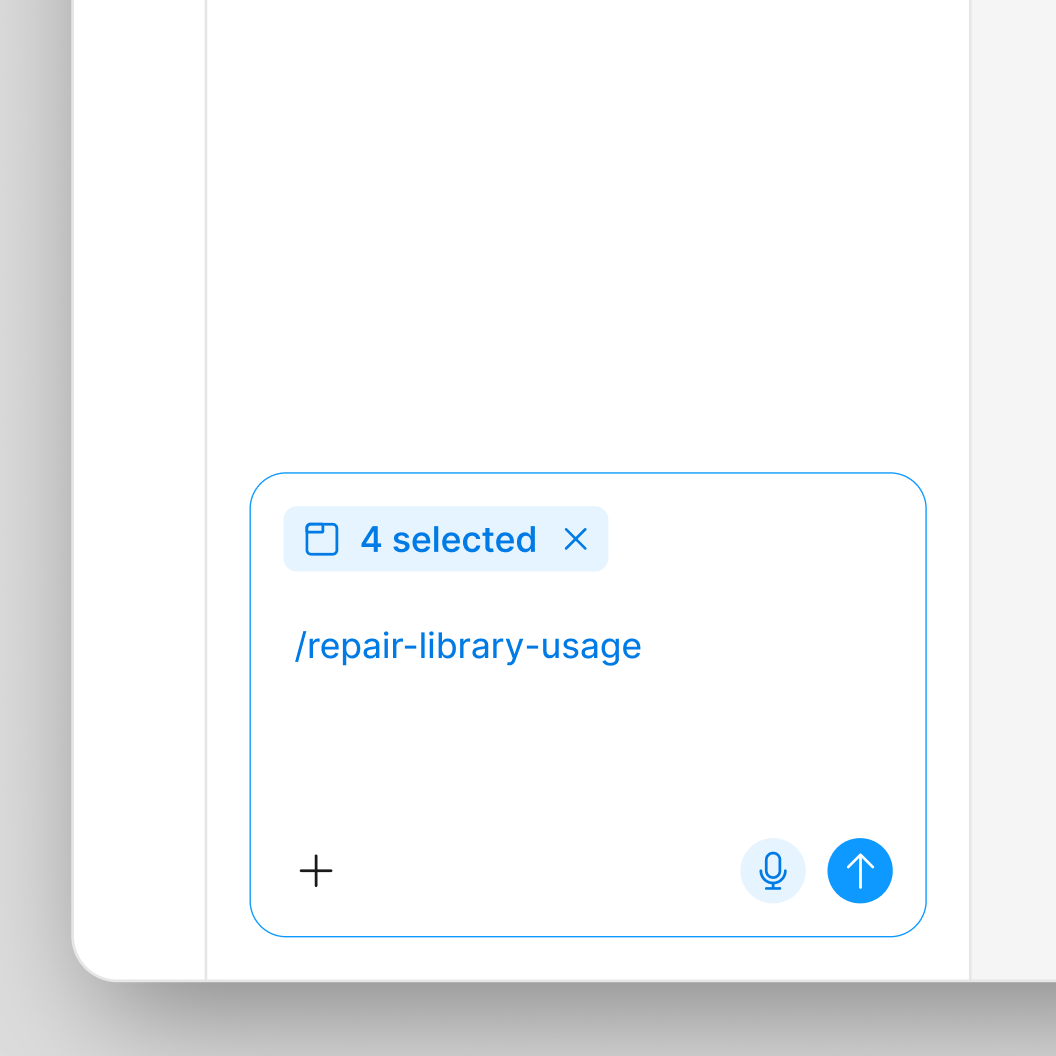
With the /repair-library-usage skill, the agent checks component instances and variable bindings against that library. It applies clear replacements, while leaving ambiguous matches untouched and annotating why it stopped. The scope stays with the frames needed for the new feature instead of turning into an indiscriminate file-wide cleanup.
Turn critique into actions and open questions
The designer takes the first pass to a design crit. Some comments call for clear actions, such as clarifying expiration copy or making recovery easier to find. Others raise policy questions: What happens if an invitation expires before acceptance? What should happen when a permission update fails?
The agent groups recurring feedback, surfaces contradictions, and summarizes unresolved questions. That makes it easier to see which screens to revise and which decisions need a policy owner.
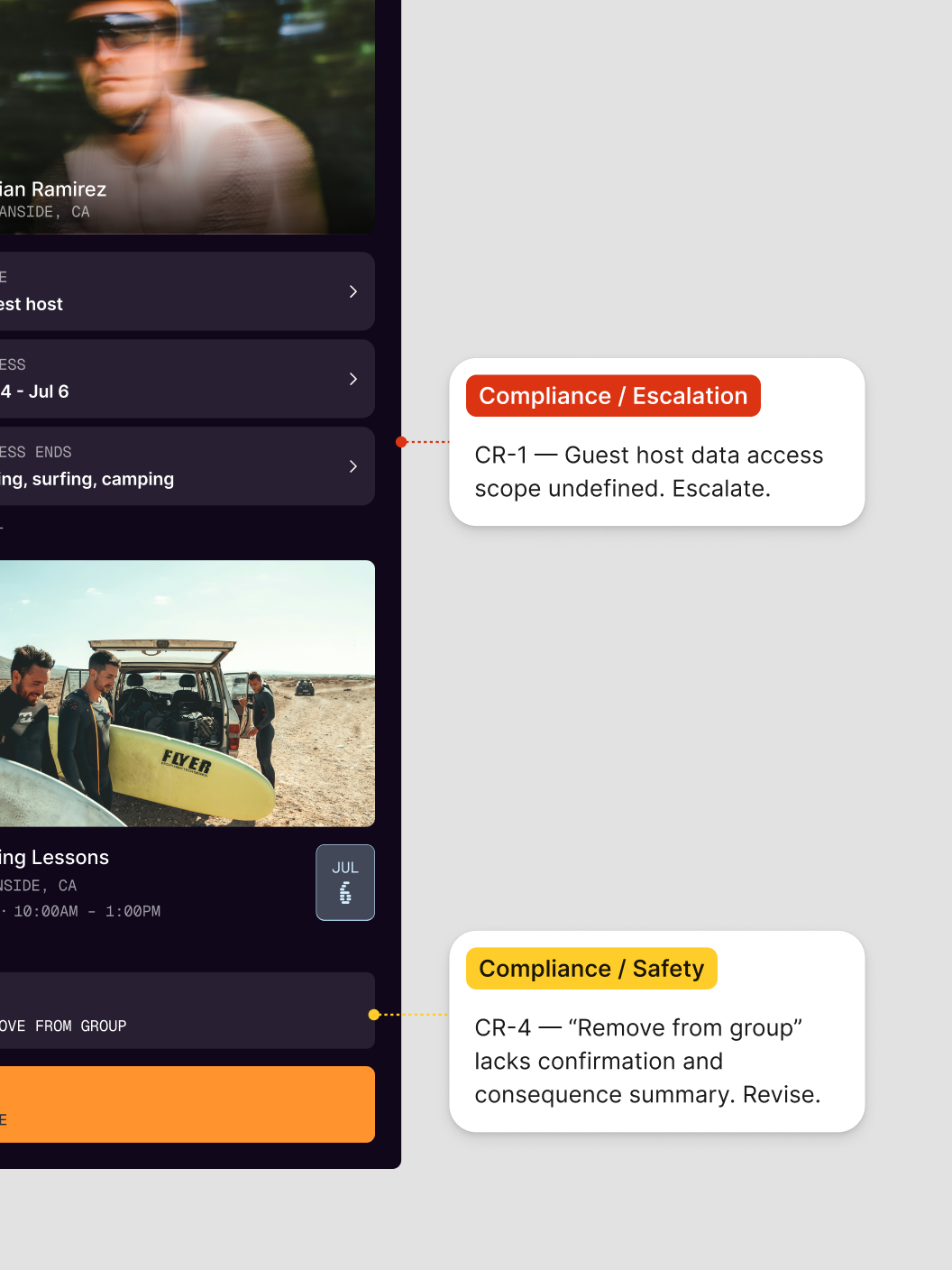
For questions involving access, identity, and permissions, the designer runs the team’s /compliance-review skill against its security and compliance guidance. In the example, annotations flag an undefined guest data-access scope and a removal flow that lacks confirmation and a summary of consequences. These are review signals, not a compliance certification or policy decision; the responsible people still interpret the guidance and decide how the product should behave.
Watch the compliance-review video in the official Vimeo player.
Draft a system change instead of creating a one-off component
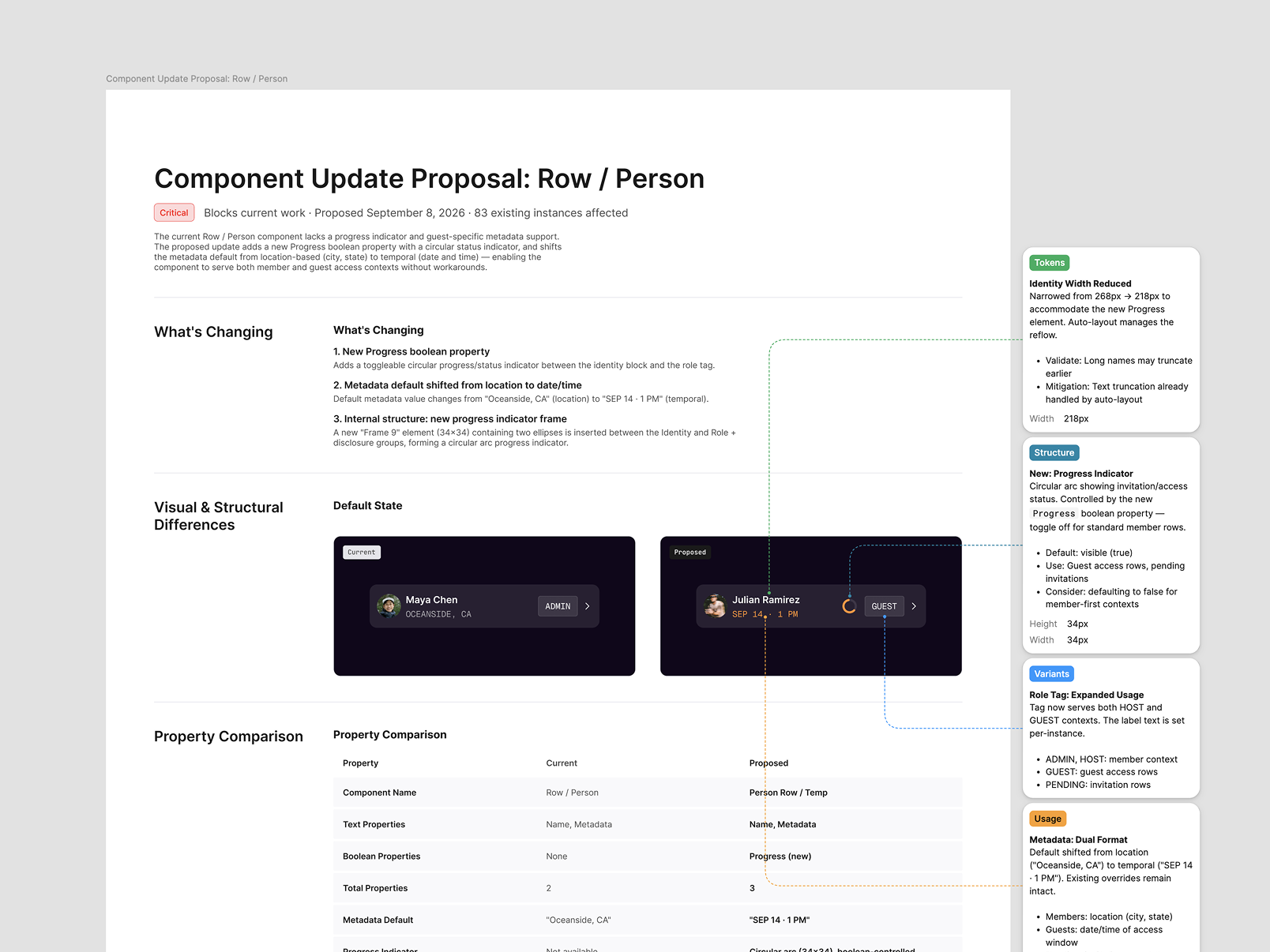
The flow reveals that people need to see when temporary access expires, including in a list. A custom component for this feature could drift away from Offtrail’s design system. The designer considers extending the existing item row component and asks the agent to draft a spec with /document-component-enhancement.
The draft describes the component gap, expected behavior and missing states, along with possible changes and open questions. The designer reviews it and shares it with the design systems team, which retains ownership of the component decision.
Keep judgment with the people who own it
In this sample workflow, the agent handles repetitive inspection, clear library replacements, feedback grouping, guided review annotations, and a first spec draft. The designer interprets policy, resolves ambiguous cases, and decides what belongs in the feature. The design systems team decides whether and how to change the shared component.
Figma’s October 6, 2026 release notes announce the agent’s move out of beta and updates including file search, library guidelines, and live canvas collaboration with teammates’ agents. Agent usage started drawing on Figma AI credits that day. Consumption varies with prompt complexity, actions, and supplied context such as connected libraries. Access can also vary by plan, seat, rollout, and admin settings, so check Figma’s current guidance for your account.