"Cursor has Claude, Codex, and Gemini. Why would anyone pay for them separately?"
This question spread for a simple reason. If you can pick from many models in one editor, a subscription to each model service looks redundant. But what Kavya's question misses is that access to a model and the right to use a service are not the same product.
Cursor's model list versus a subscription
Cursor's official docs say it supports models from several providers, including OpenAI, Anthropic, and Google. At the same time, it distinguishes between Cursor's own model pool and a third-party model pool.
According to the official pricing docs, third-party models are billed at the model API rate from the Other Models pool. Pro, Pro Plus, and Ultra include third-party usage, but the included amount gets used up depending on which models you pick and how much you use.
So "it's on the list" doesn't mean "you can use it with the same limits as the dedicated service." First, check the tokens and number of tasks you actually consume.
Same model, different working environment?
Even with the same model, a different call path can change the working experience. Cursor bundles the agent, autocomplete, and code context inside the editor, while each model service provides its own harness and usage policy.
This difference doesn't mean one model performs better. It means that even with the same model, how files are edited, the approval flow, session management, and usage display can differ. Cursor's pricing page also describes plan features and usage allocation as separate items.
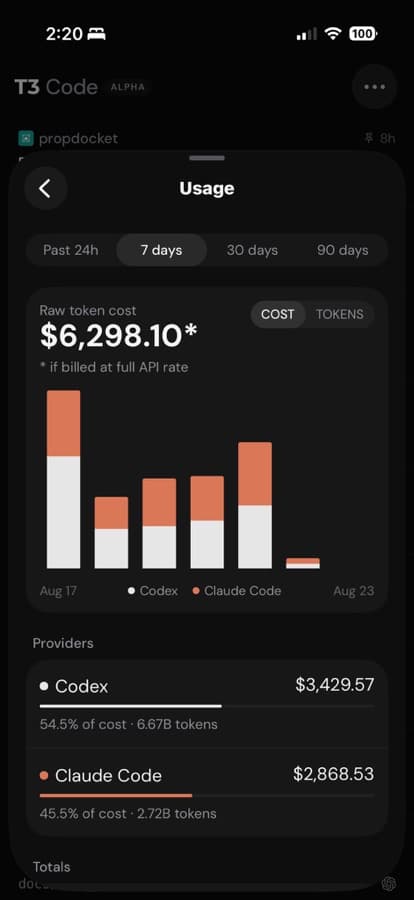
Look at a week of usage before you pay
Before adding a subscription, break down your last week of work by model. The cost structure changes depending on whether you run more agent tasks than code generation, or more short autocompletes.
Writing these three things in the same table makes the decision easier. The first is monthly usage. The second is your primary working environment. The third is code retention and privacy settings. Cursor describes Privacy Mode and its code retention policy separately.
Pick the bottleneck before the model
If the core of your work is switching among several models inside Cursor, the convenience of an integrated editor may matter more. Conversely, if the bottleneck is a long session with a particular model, a dedicated harness, or team management features, a separate subscription can make sense.
In the end, the question isn't "which model is better." It's closer to "is the most expensive bottleneck in my work model access, usage, or working environment?" Comparing against a month of real usage before adding subscriptions reduces overpaying.