HydroGym, an open-source reinforcement learning platform built by an international team that includes Professor Steven Brunton of the University of Washington, has been published in the journal Nature. Brunton shared the news himself on his X account on August 21, 2026. We checked the paper along with the earlier preprint.
One channel flow, 38% less wing drag
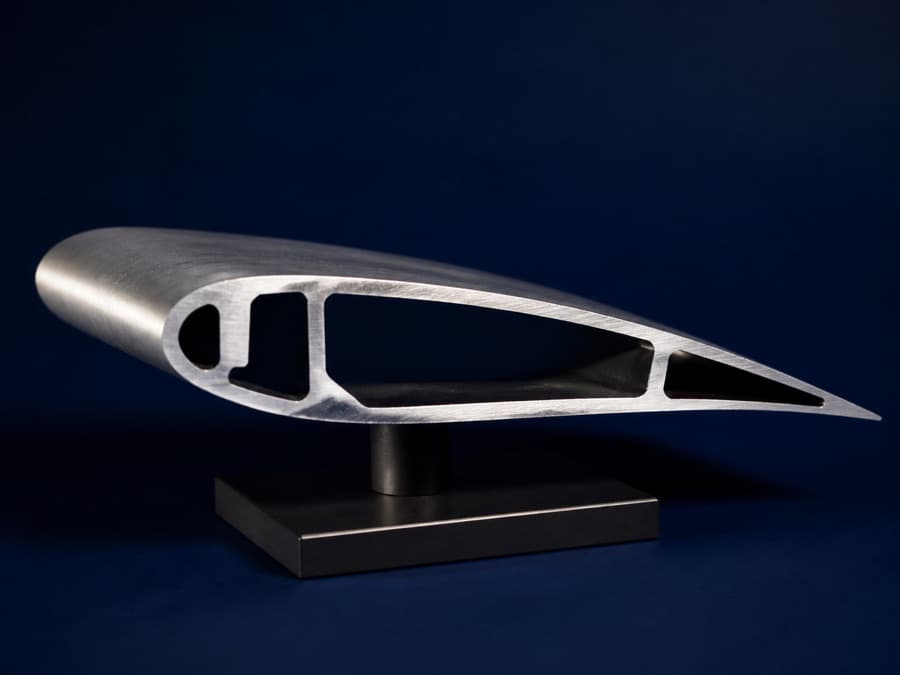
HydroGym is a platform designed to apply reinforcement learning (RL) to fluid dynamics problems. It offers about 60 standardized environments, from simple problems like controlling drag on a circular cylinder to 3D turbulent flow. According to the team, an agent trained only on simple two-dimensional channel flow reduced skin-friction drag by 38% on a 3D airfoil section it had never been trained on (Reynolds number of about 200,000).
The efficiency is even more striking. Compared with optimizing the wing shape directly, this generalization route cut search cost by four orders of magnitude (10⁴×), the team says. They also reported drag reductions of more than 90% under well-defined conditions such as the circular cylinder. In effect, it tackles head-on the computational cost of moving RL out of the lab and onto real engineering problems.
Key author: Professor Brunton
The research involved researchers from several institutions, including the University of Washington and RWTH Aachen University, among them Christian Lagemann and Steven Brunton. Brunton is a professor of mechanical engineering at the University of Washington, known for work that brings machine learning and data-driven modeling to fluid dynamics. Because it went through multi-institution collaboration and Nature's peer review, the result can be seen as validated beyond the level of a single lab.
Try installing it from GitHub
It is released under the MIT license in the dynamicslab/hydrogym repository on GitHub. It uses a Gymnasium-compatible interface, so it connects directly to standard RL libraries such as Stable-Baselines3. It supports several CFD solvers as backends, including Firedrake and MAIA LBM, and the official docs recommend running it in a Docker container.
That said, this is a research platform, not a ready-to-use product. You have to run the CFD solvers yourself, so you will need more compute than a typical laptop, and the exact minimum specs have not been published officially. You also need a basic understanding of both fluid dynamics and reinforcement learning to interpret the results properly.