Development & Automation

Running the 2.78-Trillion-Parameter Kimi K3 on 8GB of RAM? What Disk Streaming Really Means.

A look at kimi-k3-in-c, a 176KB C99 engine that streams Kimi K3 experts from disk, and the limits of the claim that it runs without a GPU.

· Huuush

Running the 2.78-Trillion-Parameter Kimi K3 on 8GB of RAM? What Disk Streaming Really Means

Key takeaways

  1. 1kimi-k3-in-c "runs" a 2.78-trillion-parameter model on a CPU with 8.24GB of RAM, but it does so by streaming expert weights from disk, not by loading the whole model into memory.
  2. 2The project's pure C99 engine, introduced by Alvaro Cintas, is about 176KB and runs without a GPU, CUDA, or frameworks. What got smaller is the execution engine and resident memory, not the weights.
  3. 3The 8.24GB figure is peak memory for the minimal setup. The design trades the memory limit for I/O wait time, so latency, token speed, and disk capacity are separate issues, and it is hard to see it as a production or real-time replacement.
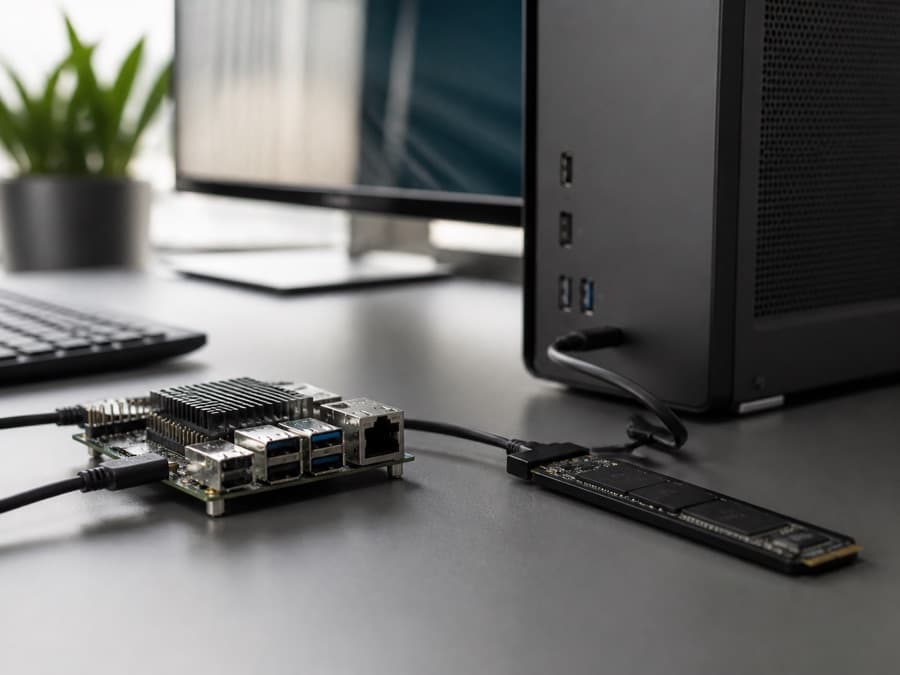
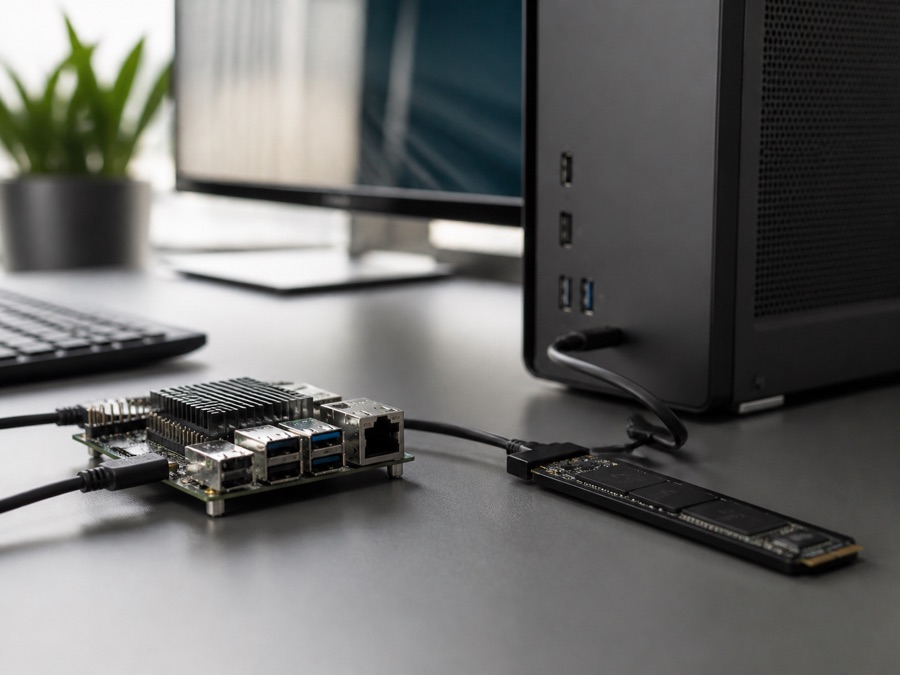
A local inference setup with a small computer and NVMe storage
Generated image symbolizing a local inference setup that reads model data from storage

When people say a 2.78-trillion-parameter model "runs" on a CPU with 8.24GB of RAM, they do not mean the whole model is loaded into memory. kimi-k3-in-c shows this difference by streaming expert weights from disk.

What the 176KB C99 Engine Changed Is Not the Model Size

The project introduced by Alvaro Cintas is described as a pure C99 engine of about 176KB that runs without a GPU, CUDA, or frameworks. What got smaller here is not the Kimi K3 weights but the execution engine and resident memory. The huge weights stay on the storage device.

Disk Streaming: Waiting Instead of Using RAM

An MoE model selects only some experts for each token. This project reads the needed experts from disk such as NVMe and clears them from memory after use. It is a design that trades the memory limit for I/O wait time.

"No GPU" Does Not Mean Fast

8.24GB is the peak memory figure for the minimal setup given in the post. It is meaningful that a large model can be invoked with a CPU and a storage device, but latency, token speed, and disk capacity are separate issues. It should not be read as an immediate replacement for production services or real-time conversation.

The Practical Lesson for Developers

What becomes possibleWhat you still need
Architecture validation and experiments on low-memory machinesEnough disk capacity and fast I/O
Model access in GPU-free environmentsTolerance for long response times
Fewer framework dependenciesA review of the project's reproducibility and licensing

The twist in this project is not that a small PC runs a giant model quickly. It is that it widened the definition of what is runnable beyond memory.

Sources: Alvaro Cintas's X post · Kimi K3 paper

Frequently asked questions

Can you really run a 2.78-trillion-parameter model on 8GB of RAM?
It does not load the whole model into memory. In the MoE design, it reads only the expert weights needed for each token from disk such as NVMe, and clears them after use, so it works by streaming.
Is it fast without a GPU?
No. "No GPU" does not mean fast. The design trades the memory limit for I/O wait time, so latency and token speed are separate issues.
Is 176KB the model size?
No. 176KB is the size of the pure C99 execution engine. The huge Kimi K3 weights stay on the storage device.
How can I use it in practice?
It can be used for architecture validation, experiments, and model access in low-memory, GPU-free environments, but it still needs enough disk capacity and fast I/O, tolerance for long response times, and a review of reproducibility and licensing.

Related articles