Development & Automation

AI Agents That Only Looked Can Now Do 3D Modeling.

Qwen released the open-source Qwen-MM-Plugins, which turn text agents into multimodal agents handling images, video, documents, and 3D/CAD. Here's how the structure works.

· Huuush

AI Agents That Only Looked Can Now Do 3D Modeling

Key takeaways

  1. 1Which agent harnesses (Claude Code, other CLIs, and so on) it's actually compatible with needs to be checked individually in the repository docs.
  2. 2The Blender and FreeCAD integration tools assume the software is installed in your local environment, so you need to set up an execution environment that fits your studio's infrastructure first.
  3. 3Because each capability is installed separately as an MCP server, it's safer to attach only the capabilities you need to keep security and resource burden in check.
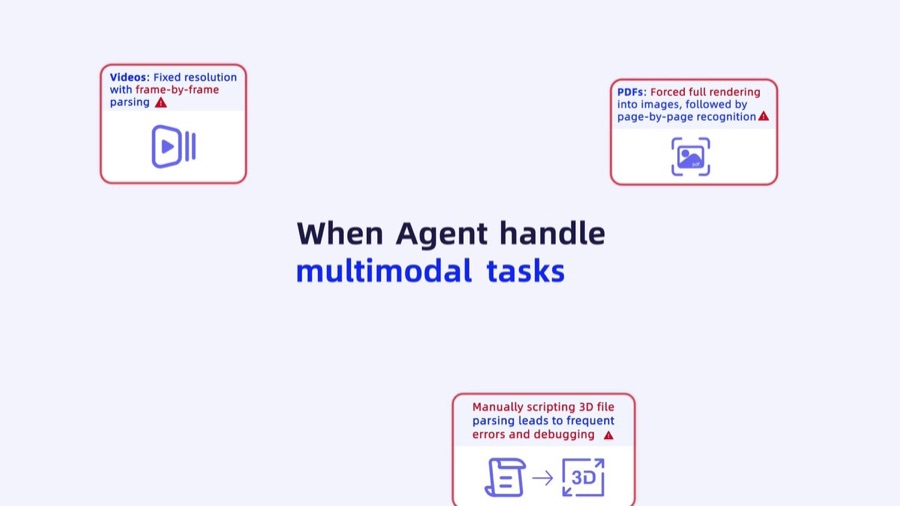
Still from the original X video showing how Qwen-MM-Plugins adds image, video, document, and 3D/CAD processing abilities to an agent through skills and MCP servers
Still from the original X video

An Agent That Only Read Text Suddenly Fires Up CAD

The official Qwen X account released Qwen-MM-Plugins with the line "Seeing is just the beginning." The gist is simple. Add this plugin to the agent harness you're using now, and that agent becomes a multimodal-native agent that reads images, video, and documents, edits video, and even handles 3D and CAD work. The announcement tweet drew 210,000 views and 1,900 likes and spread quickly through the open-source community.

A Structure with Skills Attached Separately from Execution Servers

Looking at the GitHub repository, the structure has two layers. For each capability, the skill only tells the model that "this toolset exists," and the actual work is done by an optionally installed MCP server. The basic vision features alone include dynamic-resolution reading of images, video, documents, and 3D models, OCR, grounding, segmentation, ASR, vision chat, and web search, and on top of that come tools that drive Blender 3D modeling and FreeCAD parametric CAD through Python.

What Changes for Studio Practitioners

The key to this structure is that you don't have to rebuild your agent. If you pick just the skills and MCP servers you need and attach them to an agent pipeline you've been running mostly on text, a single agent can handle, in sequence, analysis of client reference images, rough cuts of footage, summaries of contracts and planning documents, and even first drafts of 3D mockups. Especially in studio workflows where video and CAD deliverables pass back and forth, it opens up room to run review-and-revise loops inside the agent without moving between separate software, which is a practically meaningful change.

What to Check Before You Attach It

  • Which agent harnesses (Claude Code, other CLIs, and so on) it's actually compatible with needs to be checked individually in the repository docs.
  • The Blender and FreeCAD integration tools assume the software is installed in your local environment, so you need to set up an execution environment that fits your studio's infrastructure first.
  • Because each capability is installed separately as an MCP server, it's safer to attach only the capabilities you need to keep security and resource burden in check.

For detailed installation instructions and demo videos, see the Qwen-MM-Plugins repository.

Frequently asked questions

What is the key point of 'an agent that only read text suddenly fires up CAD'?
The official Qwen X account released Qwen-MM-Plugins with the line "Seeing is just the beginning." Add this plugin to the agent harness you're using now, and that agent becomes a multimodal-native agent that reads images, video, and documents, edits video, and even handles 3D and CAD work. The announcement tweet drew 210,000 views and 1,900 likes.
What is the key point of 'skills attached separately from execution servers'?
The GitHub repository has two layers. The skill only tells the model that a toolset exists, and an optionally installed MCP server does the actual work. Basic vision features include dynamic-resolution reading of images, video, documents, and 3D models, OCR, grounding, segmentation, ASR, vision chat, and web search, plus tools that drive Blender 3D modeling and FreeCAD parametric CAD through Python.
What is the key point of 'what changes for studio practitioners'?
You don't have to rebuild your agent. Attach just the skills and MCP servers you need to an existing text-centered pipeline, and one agent can handle reference image analysis, rough cuts of footage, document summaries, and even first drafts of 3D mockups, running review-and-revise loops without moving between separate software.

Related articles