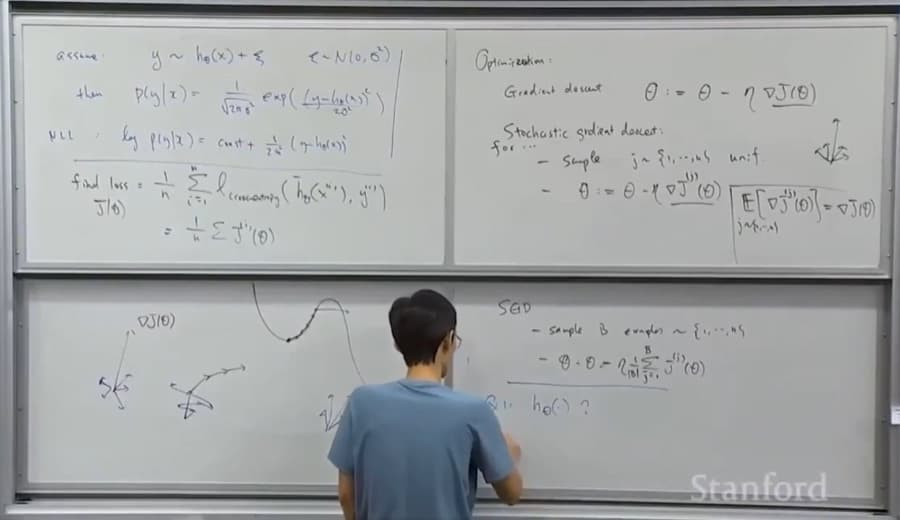
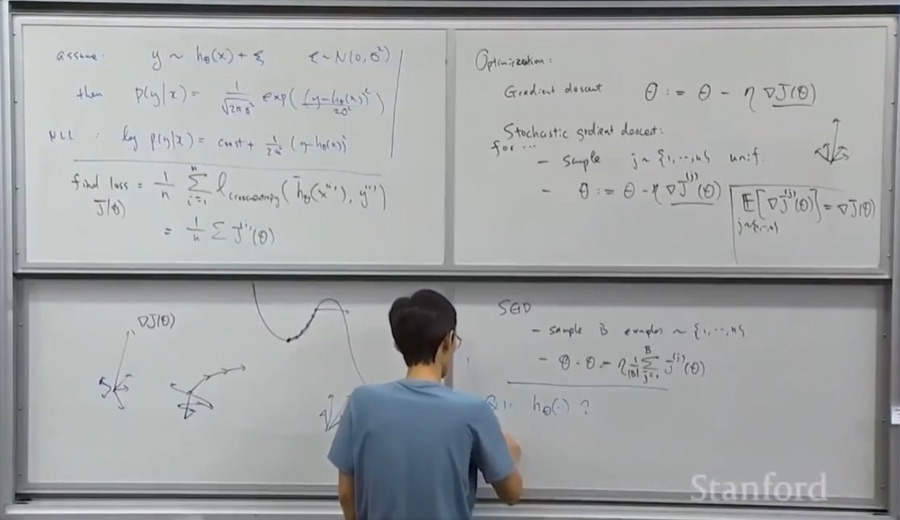
A post brought Stanford's CS336 course back into view. A scene of an instructor explaining an LLM's loss function and gradient descent in front of a white board spread along with a note that the whole course is free to watch. The original post tied the course's value to a salary number, but that figure can't be confirmed on Stanford's official course page.
What can be confirmed is separate. CS336 is a course where you build a language model yourself, from data collection through pretraining, implementing a transformer, evaluation, and deployment. Using only the course structure that can be confirmed, this article lays out where to start for practitioners who want a deeper understanding of generative AI.
19 lectures that take LLMs out of the API
The official Stanford page describes CS336 as a "Language Modeling from Scratch" course. The lectures start with implementing a tokenizer and model architecture and continue through systems optimization, distributed training, data filtering and deduplication, and alignment and inference.
The official schedule lists 19 lectures. In other words, this course is closer to an implementation-focused curriculum that follows the numbers and data flows that make up a model than to a tutorial on how to use a particular model.
Whiteboard math changes practical judgment
The official assignments include implementing a tokenizer, model architecture, and optimizer, memory-efficient distributed training, scaling laws, and Common Crawl data cleaning and deduplication. This setup makes you look at which stage, data, training, or evaluation, changed the result, instead of only looking at the outcome that "the model answers well."
Product and content teams can borrow this perspective too. When comparing search, summarization, or coding features, don't just write down the model name. Recording input data quality, evaluation criteria, failure cases, and reproduction conditions together makes adoption decisions less shaky.
A free course: verify it one week at a time first
If you try to watch all 19 lectures from the start, you're likely to stop partway. First check the Python, deep learning, and systems optimization basics the official page asks for, then just follow the first week's tokenizer and basic language model assignments.
When you run the code yourself, keeping records matters more than the results. Save the dataset version, GPU environment, training time, and evaluation samples together so you can compare against your next experiment. The value of CS336 isn't in promising a high salary but in getting you to look again at abstracted AI services as individual components.