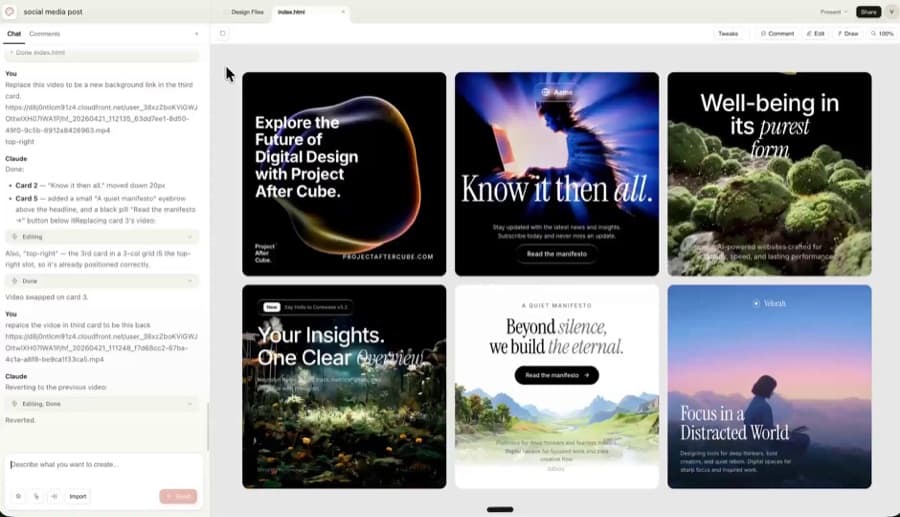
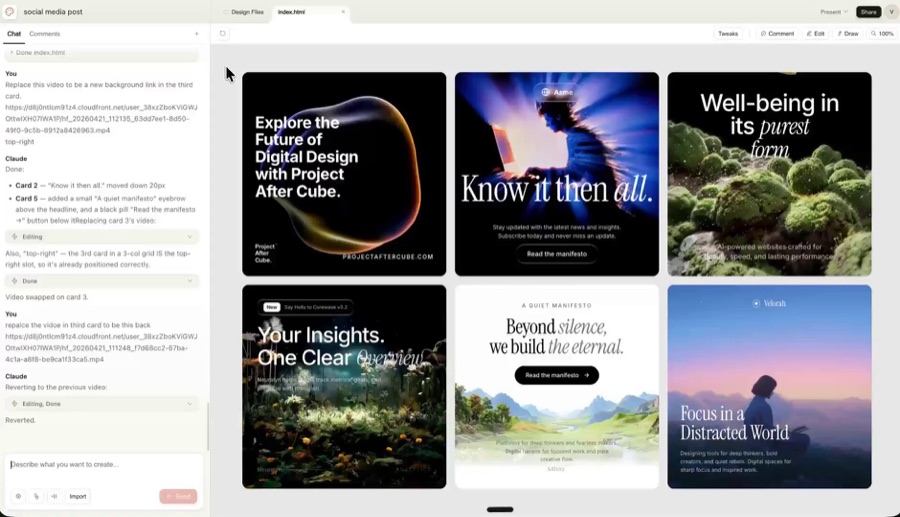
A post by X user angel (@angeldot_) on August 11, 2026 got a lot of attention. It opened with "ANTHROPIC JUST KILLED 'AI SLOP' IN WEB DESIGN" and said an open-source project called Frontend Design has 167,000 GitHub stars and 758,000 installs. When we checked, Frontend Design is a real project. It's one of the "Agent Skills" included in the anthropics/skills repository, which Anthropic officially maintains, at the path skills/frontend-design. The repository's star count, checked directly through the GitHub API, was 167,716, with 19,994 forks, nearly matching the X post's "167,000."
But there's something to flag before taking those figures at face value. The 167,716 stars aren't a number for the frontend-design skill alone. They're the star count for the whole anthropics/skills repository, which contains several skills. GitHub doesn't count stars per subfolder, so the phrase "this project alone has 167,000 stars" is, strictly speaking, closer to describing the whole repository's popularity as if it were one skill's achievement. We also couldn't confirm an official Anthropic figure for "758,000 installs." skills.sh, a third-party skills marketplace, displays the frontend-design skill's install count as "763.8K," which is close to the X post's figure, but that's the third-party platform's own tally, not a metric Anthropic officially verified. The engagement figures for the X post itself that this article touches on, such as views, likes, and reposts, are likewise numbers from an individual author's account, treated only as unverified, per the original post.
Frontend Design Isn't an App, It's a "Guidance Document"
To put Frontend Design's reality precisely, it isn't a program you install and run but a single SKILL.md file that tells Claude how to approach web design work. The repository contains only this guidance document and a license file. When this skill is activated in Claude products that support Skills, including Claude Code, Claude starts work assuming it is "the design lead at a small studio that builds a unique identity for each client." Before writing code, it's required to define a palette with 4 to 6 hex codes, assign typography roles, and sketch the layout first as an ASCII wireframe. In other words, Frontend Design is closer to a prompt engineering document that sets the "order of thinking" an AI should go through before it starts designing, not a finished design system or template.
"Cookie-Cutter AI Websites" Is a Shared Complaint Across the Industry
The problem this skill targets isn't an exaggeration. The complaint that asking an AI for a website always produces similar results has been raised repeatedly in developer and design communities. According to a related post, Tailwind CSS creator Adam Wathan posted on X in August 2025 something like an apology: that making every button in Tailwind UI indigo (bg-indigo-500) five years ago ended up making all AI-generated UI indigo, and it drew more than a million views. Another analysis also defines "AI slop" as a purple-to-blue gradient hero, 1-pixel gray borders on every card, Inter headlines, three feature cards side by side, and dark mode switched on without being asked. Because the median of the training data comes out as the output, this sameness is treated not as a problem of any one AI tool but as a structural phenomenon across generative AI web design.
For Designers and Developers, It's More Accurate to Use It as a Briefing Checklist
From a studio perspective, the practically useful point is that Frontend Design doesn't force a particular style. SKILL.md instead asks you to turn the three clusters that current AI-generated design crowds into, a warm cream background with serif type and a terracotta accent, a near-black background with a single neon green or vermilion accent, and a broadsheet layout of hairlines and sharp corners like a newspaper page, into "a choice rather than a default." But when we checked the original directly, the wording "bans Inter font and purple gradients" isn't actually in SKILL.md. "Inter + purple" is closer to an abbreviated meme widely used in the industry to refer to the sameness of AI web design, and the skill document itself describes broader principles (start from the subject, don't overuse numeric markers or animation without grounds, treat copy as design material too). If you share a checklist like this within the team at the briefing stage, it's worth using as a standard for judging "why this result came out," whatever tool you actually use.
| Item | What we found |
|---|---|
| Does the project exist? | Yes — an official skill in the anthropics/skills repository |
| GitHub stars | 167,716 (whole repository, not counted for the skill alone) |
| GitHub forks | 19,994 (whole repository) |
| 758,000 installs | No official Anthropic figure confirmed — close to the 763.8K tallied by the third-party marketplace skills.sh |
| "Inter / purple banned" wording | Not directly stated in the SKILL.md text |
Figures from: GitHub anthropics/skills, skills.sh
In summary, Frontend Design isn't a "fake project." It's a real official Anthropic open-source skill, but some of the specific figures the X post cited appear to be the result of mixing repository-wide metrics with skill-only metrics, or of carrying over third-party estimates as if they were official numbers. Because it's free and public, and anyone can check the SKILL.md in the repository or activate it directly in Claude Code, the safest practical approach is to adopt the concern that "AI-made websites all look alike" as a standard for team briefings. Rather than introducing it as a tool that replaces a specific design system, it's more faithful to the facts to treat it as a reference document showing what you should specifically ask for when you hand web design to an AI.