Researchers Planted a "Thought" Directly in Claude's Activations
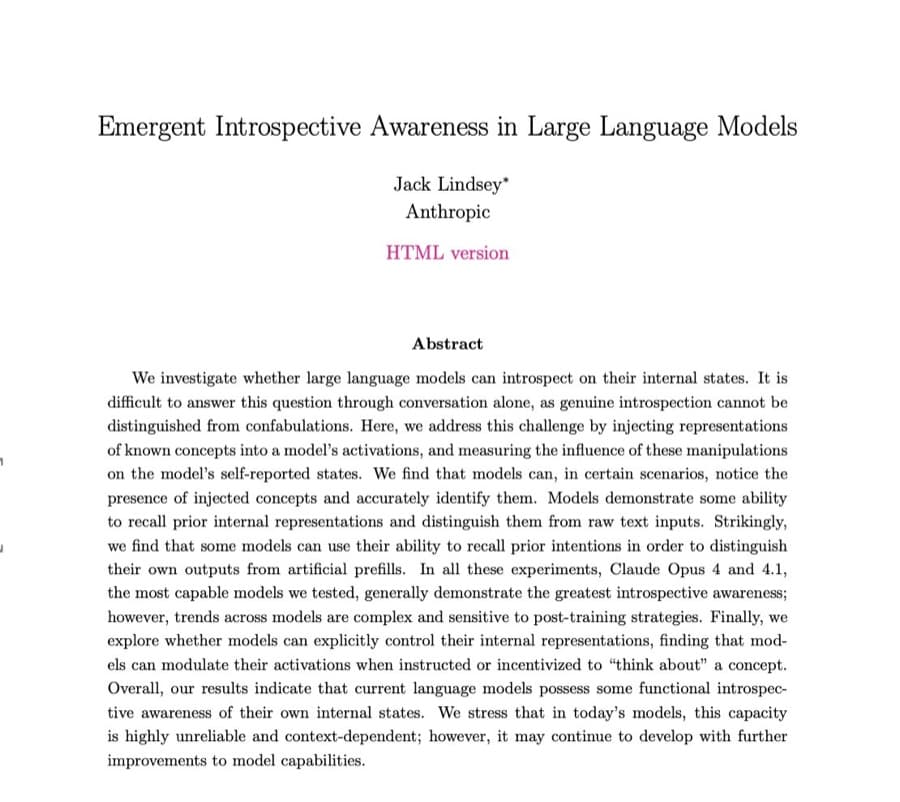
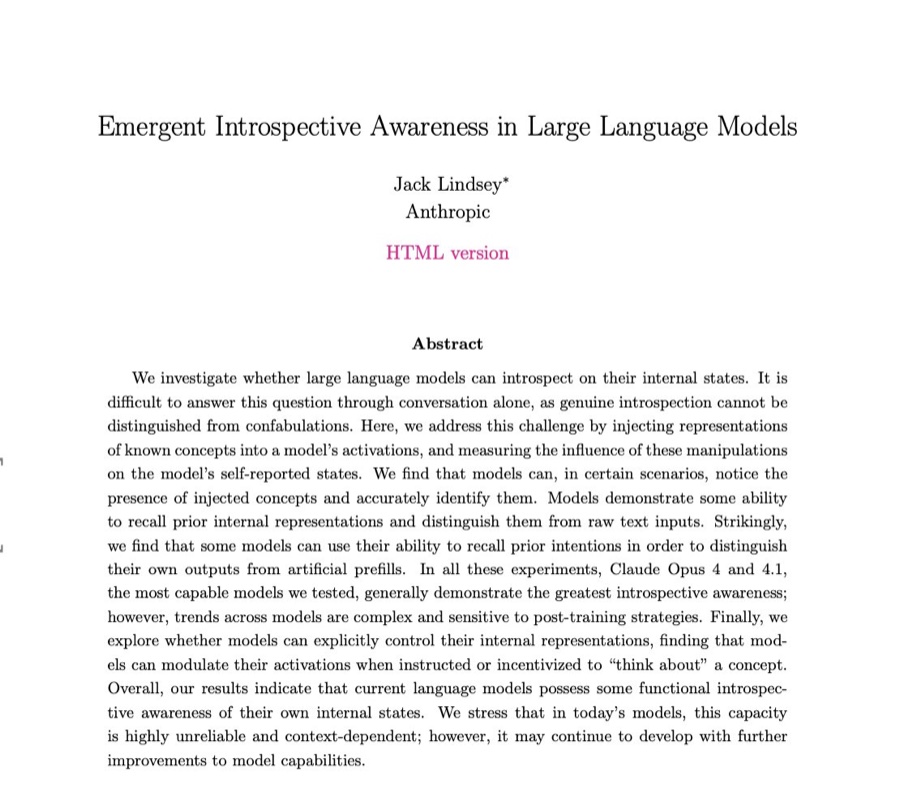
On August 11, 2026, a thread by the X account Superman (@thesupermanmx) spread to more than 260,000 views. It summarized the paper "Emergent Introspective Awareness in Large Language Models", published October 29, 2025 by Anthropic researcher Jack Lindsey. Using mechanistic interpretability techniques, the researchers injected the mathematical representation of a specific concept, such as "loud" or "noisy," directly into Claude's internal activations. They used no ordinary text prompt at all.
What made the result interesting is that Claude, after receiving the injected concept, actually responded along the lines of "that wasn't my thought." According to the paper and the X posts citing it, Claude reported things like "I feel something that seems like an injected thought... it seems related to sound or shouting."
It Told Injected Thoughts Apart?
Anthropic had previously forced a model to keep thinking about a particular concept (the Golden Gate Bridge) in "Golden Gate Claude." That model repeated Golden Gate Bridge talk without knowing why, much like a puppet on strings. What differs this time is that Claude did not simply repeat the injected concept; it distinguished its own original thinking from the concept that was artificially inserted. The researchers named this "emergent introspective awareness."
A 20% Success Rate Means 80% Failure
| Item | Details |
|---|---|
| Models tested | Claude Opus 4, Opus 4.1, and others (introspection was clearest in the most capable models the team tested) |
| Success rate | Detected the injected concept in about 20% of trials under the best injection strength and layer conditions |
| Additional abilities found | Some models recalled earlier internal representations and told apart output they actually generated from text artificially inserted (prefilled) |
| Control experiments | When instructed or rewarded to "think about" a specific concept, models were also seen adjusting their own internal activations in that direction |
In other words, "20%" also means the failure rate is 80%. The researchers themselves stated that "this ability in today's models is highly unreliable and context-dependent."
Not "Consciousness," and Hard to Verify
Anthropic drew a clear line: this does not mean Claude is conscious. The paper itself says that, beyond basic detection and identification, the detailed explanations models give may still be confabulation (plausible-sounding invented accounts), and that much of that content cannot be verified from the outside. The news spread quickly on X, and VentureBeat ("Anthropic scientists hacked Claude's brain — and it noticed"), Computerworld, InfoWorld, and TransformerNews also covered it.
Whether It's the Same Study Is Unconfirmed
Some social media posts mention a separate paper with an arXiv number ("Mechanisms of Introspective Awareness") as if it were the same as this study. Whether the two are the same research or a separate follow-up is left as unconfirmed in this post. Only facts based on Anthropic's official research page (transformer-circuits.pub) are included here. "AI detected its own thoughts" sounds sensational, but the researchers stress nearly the opposite: this ability is still primitive, unstable, and mostly unverifiable.