Before you install a skill on your agent, it now gets inspected first. Nous Research said on its official X account on August 20 that it has attached NVIDIA's SkillEvaluator to its agent harness Hermes.
From PII to Unicode smuggling
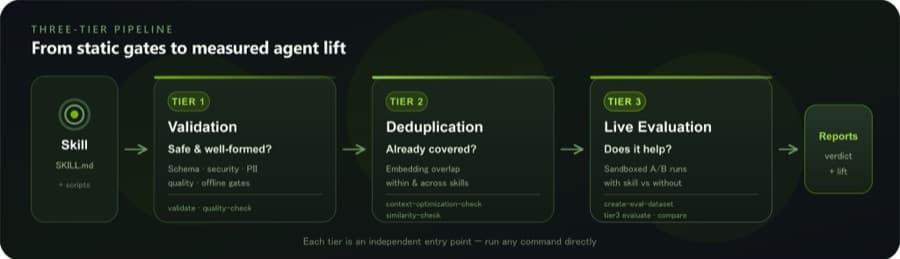
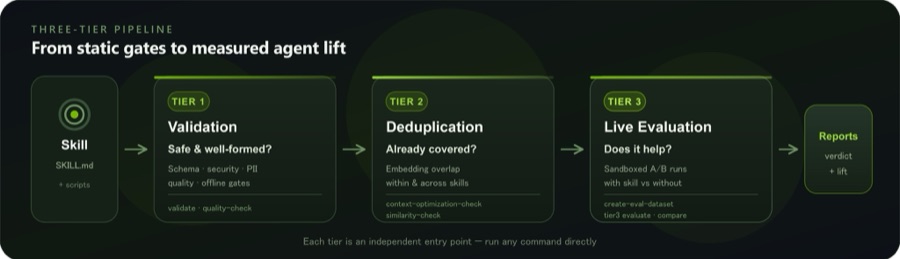
In its official announcement, Nous Research said that "when installing a skill, Hermes uses NVIDIA SkillEvaluator to check for PII, secret leaks, Unicode smuggling, license, and security issues before you hit confirm."
This check doesn't block installation. According to Hermes's official documentation, the Tier 1 check is deterministic and works without an API key, and findings are shown with file names and line numbers before you confirm installation, but the installation itself still goes ahead. Items that look like real credentials (private keys, cloud access keys, tokens, and connection strings containing credentials) are highlighted in red so the user can decide for themselves whether to install.
Agent skills are downloaded and installed freely from a marketplace, so in effect files with code-execution permissions were being brought in with no real verification. An automatic pre-install scan means this distribution structure has a minimal gatekeeper for the first time.
Why did 11 of its own skills get flagged first?
Nous Research applied this check first to the bundled skills it distributes itself. It said it found parts needing improvement in 11 skills and fixed them. Which items were real security risks and which were simple false positives hasn't been disclosed officially, which is something we can't officially confirm.
That its own content got caught by its own check shows two things at once: the check actually catches something, and even officially distributed skills had been circulating without this kind of static verification.
The effect of skills in numbers: +41 points
In a separate official technical blog post, NVIDIA published results from benchmarking more than 300 verified skills across more than 30 products on two harnesses, Claude Code and OpenAI Codex. It compared with and without skills on the same tasks, the same model, and the same settings.
| Metric | Without skills | With skills | Change |
|---|---|---|---|
| Correctness | 46 | 87 | +41 |
| Effectiveness | 39 | 78 | +39 |
| Discoverability | 42 | 82 | +40 |
| Efficiency | 43 | 78 | +35 |
| Security | 97 | 98 | +1 |
Only the security metric stays nearly flat (97 to 98). That means skills that passed NVIDIA's verification had few security problems to begin with, and the SkillEvaluator integration Nous Research added is closer to a safeguard for the opposite side: reducing the risk from ordinary skills that circulate without being verified.
It checks, but it doesn't block installation
The feature's core limitation is clear. Even when results come back, it doesn't force the installation to stop. The final decision is still up to the user. One comment on NVIDIA AI's official account suggested "building a registry of scanned skills so enterprises can audit them," and Nous Research responded by pointing to its own Skills Hub. How systematized that hub is, separate from this SkillEvaluator integration, can't be confirmed from this announcement alone.
If your team installs and distributes agent skills internally, it's safer to first look into what this kind of check misses rather than the mere fact that it exists. Tier 1 is a static check, so malicious behavior that only shows up at runtime would only be caught by going through Tier 3 (sandboxed real-use evaluation).