
The Incident: Billed as "Sovereign AI," It Turned Out to Be API Resale
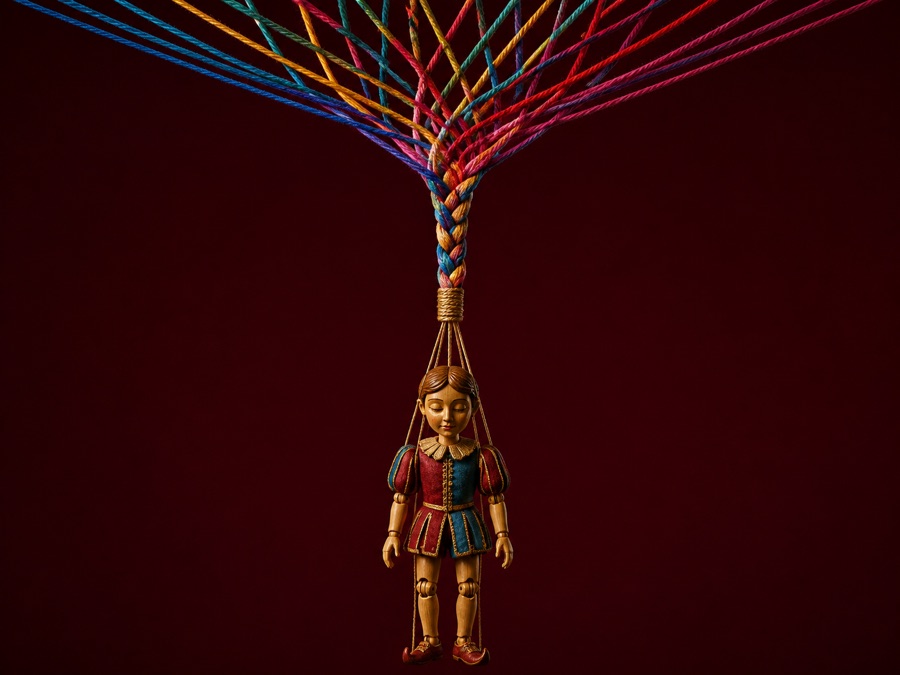
A post by X (formerly Twitter) user ZHW (@weiwei882288) at 6:28 a.m. on August 10, 2026 spread with 170,000 views and 1,200 likes. The post goes straight at "Fugu," a new model from Japanese startup Sakana AI. The gist is that Sakana's marketing copy called this model "a Fable 5-level model," but in reality it's multi-agent orchestration that calls external APIs like Claude, GPT, and Gemini and weaves their outputs together, and since inputs and outputs ultimately pass through U.S. companies' servers, the very label "Sovereign AI" doesn't hold up. But the quoted original text cuts off mid-post, so whether this summary accurately captures the whole point of the post is, based on ZHW's X post, not yet verified by a third party.
Context: Why and How Did Fugu Come Out?
Sakana AI released Fugu on June 22, 2026, saying it stands shoulder to shoulder with Fable 5 and Mythos Preview "without training a single frontier model." The timing is neat, because ten days earlier, on June 12, the U.S. Department of Commerce placed export controls on Anthropic's Fable 5 and Mythos, and teams that had been using those models lost their API access overnight. According to VentureBeat, Fugu is "a learned orchestrator, not an if/else router," a model that learned on its own when to delegate to which agent and how to synthesize results, in Sakana's explanation. Sakana CEO David Ha called "depending on a single company's API for core infrastructure a serious vulnerability" and put Fugu forward as a practical alternative for "AI sovereignty." But the same review points out that Fugu's agent pool is made up of closed commercial APIs like Claude, GPT, Gemini, DeepSeek, and Kimi, and that even the ratio of open to closed models hasn't been disclosed. Sakana itself describes Fugu as "a language model trained to call various LLMs," so it doesn't deny calling external APIs. It just doesn't say which models it uses or how much.
Count the Hidden API Costs First
The controversy over a product promoted as a "homegrown model" that's actually a combination of external APIs comes down to three threads. The first is transparency. paddo.dev's analysis points out that Fugu's documentation labels internal models only anonymously as "Model A/B/C," so you can't trace which model handled which request, and describes the performance claims as made "on irreproducible benchmarks, unverifiable baselines, and an unseen model pool." For enterprise and public-sector customers where auditing and compliance matter, this black-box structure is itself a risk. The second is the cost structure. According to the same analysis, Fugu Ultra is billed at $5 / $30 per million input / output tokens, a single simple question took 108 seconds, and about 60% of billed tokens went to "backchannel orchestration" invisible to the user. Because the structure calls multiple models in sequence and in parallel, the cost the end user pays accumulates not just Sakana's margin but also wholesale costs paid to Anthropic, OpenAI, and Google. The third is the paradox of vendor lock-in. As both AI News's report and the paddo.dev analysis point out, gathering several APIs behind one endpoint only turns dependence on a single vendor into "hidden" dependence on multiple vendors. If a particular provider restricts access, the whole pool shrinks, and resilience rests on "diversity," not "independence."
| Item | Sakana's marketing framing | What reports and analysis point out |
|---|---|---|
| Nature of the model | A "Fable 5 / Mythos-class" frontier model | An orchestrator that calls and synthesizes Claude, GPT, Gemini, and others |
| Sovereignty | "A practical alternative for AI sovereignty" | Inputs and outputs pass through U.S. (and partly Chinese) companies' APIs |
| Model pool makeup | Emphasizes published benchmark advantages | Anonymized as Model A/B/C, proportions undisclosed |
| Cost | Simplified into a single endpoint | $5–30 per million tokens for Ultra, about 60% of tokens go to orchestration overhead |
These three elements are tangled together. If the model pool's makeup isn't disclosed (a transparency problem), users can't tell which companies they're actually paying and how much (a cost structure problem), and they end up exposed to any policy change by a particular provider (a vendor lock-in problem). paddo.dev also describes a passage where David Ha later acknowledged that "true sovereignty means having the ability to develop and run models domestically, not working around dependence." The gap between the marketing copy and the founder's own correction overlaps considerably with the point ZHW's post made.
Fugu's Model Pool Is Still a Black Box
The ZHW X post this article quotes cuts off mid-sentence at the captured point, so we couldn't fully reconstruct its whole argument. We cross-checked the facts about Fugu's marketing and architecture against Sakana's official announcement and multiple third-party reports, including VentureBeat, buildfastwithai, paddo.dev, and AI News, but the full text of ZHW's post and its finer nuances (for example, the sentences that follow an opening like "Of course") can only be known precisely by checking the original directly. Also, the actual share Claude, GPT, and Gemini hold in the model pool, and the reproducibility of Fugu's real-world benchmarks, remain areas that are hard to verify independently from outside unless Sakana releases the data.