Price Per Token Was a Pizza Slice
OpenAI's Codex lead posted about it. He called out a common mistake in comparing price per token. It was posted at 14:52 KST on 2026-08-16.
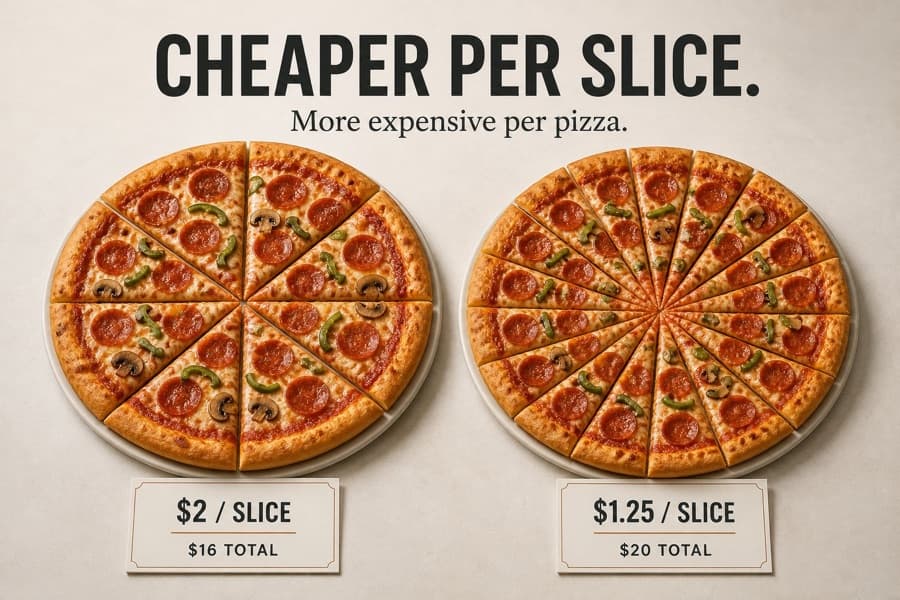
It has 584,000 views. The original post attached a pizza infographic.
The core claim fits in one line: "An OpenAI token is not another model's token."
The same text produces a different token count in each model. A lower price per token doesn't mean a lower total cost.
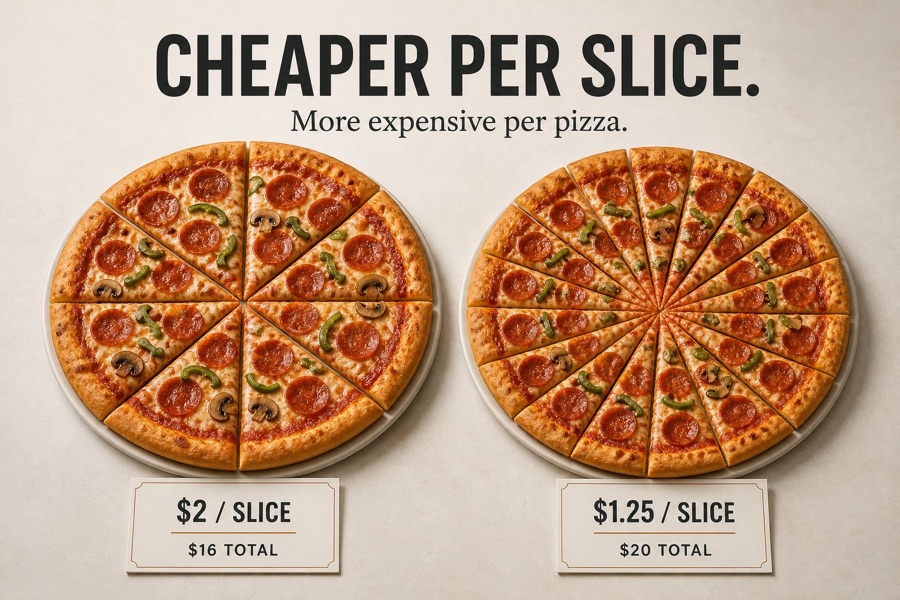
The analogy is pizza. The 8-slice pizza is $2 a slice. The total is $16.
The 16-slice pizza is $1.25 a slice. The total is $20.
| Pizza | Price per slice | Total |
|---|---|---|
| 8 slices | $2 | $16 |
| 16 slices | $1.25 | $20 |
The place with cheaper slices has the pricier pizza overall. Price per token works the same way. Check the original post.
The Price List Alone Misleads You
Why is comparing price per token so common? Because API price lists show price per token. It makes comparison look easy.
A single number feels objective. But a premise is missing: token size differs from model to model.
The same sentence yields different token counts because tokenizers differ. The variance is bigger for English, technical, multilingual, and numeric text.
Pick With Three Checks
Check three things when choosing a model. First, tokenizer efficiency. See how many tokens the same task uses.
Look at Tibo's measurement. The GPT-5.6 Sol tokenizer used 766 tokens.
He ran the same text through Claude Opus 5. The estimated token count was 1,170.
The difference is about 34.5%.
Second, cost per successful outcome. That's the total cost to produce one result, not the token price.
Third, measure on your own use case. Benchmarks are only a starting point. Tibo reaches the same conclusion.
Don't Judge by One Number
This figure is a firsthand observation. It's a result Tibo measured himself, from a single small test.
There's no independent verification yet. It hasn't been reproduced with other tools or other data. If the model version changes, the figure will change too.
The direction is still clear. Comparing price per token is only a starting point. Look at cost per successful outcome.
Whenever you read a price list, think of pizza. Compare the total price, not the price per slice.