Fired 16 Days After Sharing Her Hourly Wage
On the night of August 11, 2026, a tweet summarizing a ruling by the X account Matt Bruenig (@MattBruenig) passed 183,000 views. Based on reporting by the legal outlet Above the Law, here is how the case unfolded. Daniela Melendez, an administrative assistant earning $22 an hour at Autofit, an aftermarket auto parts company, shared her hourly wage with a coworker within days of starting. The coworker asked a supervisor for the same pay and was refused, and 16 days later Melendez was fired.
An Admission Written Into a ChatGPT-Drafted Response
When Melendez applied for unemployment benefits with the state, Autofit had to file a response contesting the claim. The response was written by Guevara, a human resources staffer at the company, who used ChatGPT to draft the response. The problem is that the draft stated, as written, that she "shared pay details with coworkers despite being expressly instructed to keep sensitive information confidential." Firing an employee for sharing wage information with coworkers is an illegal reason under many labor law systems, so the company had effectively submitted a document stating an unlawful reason for the firing.
The Belated Explanation: "ChatGPT Made It Up"
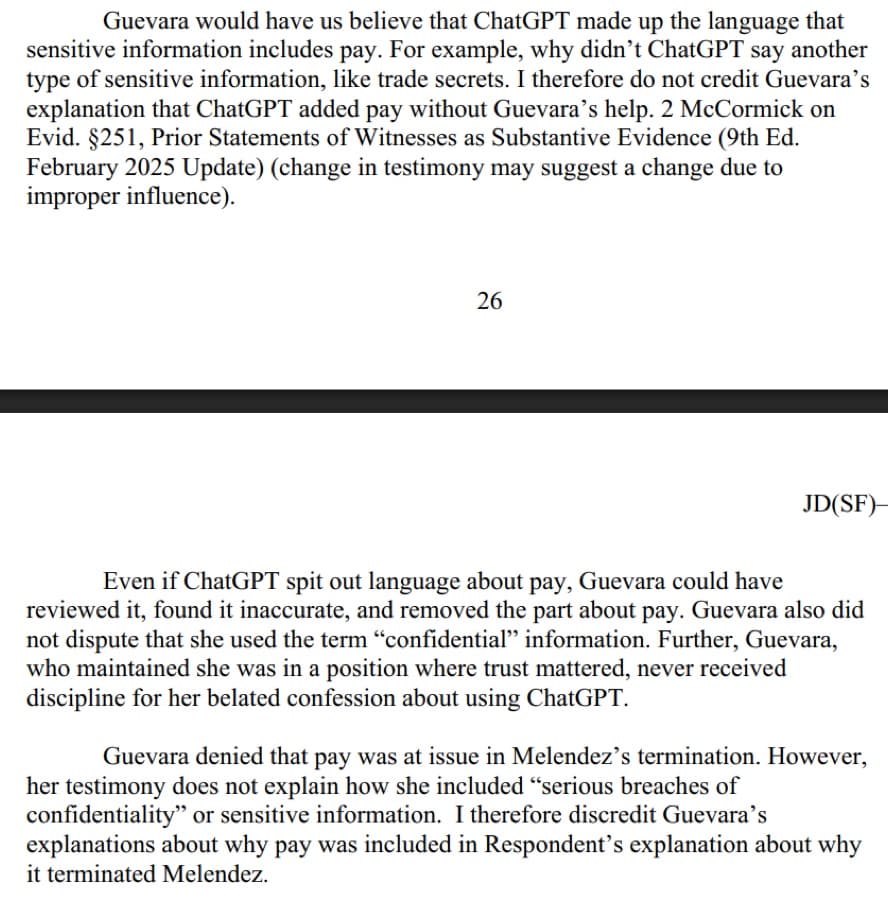
After recognizing the problem, Autofit changed its stance at the hearing. Guevara testified that "the language saying wages are sensitive information was something ChatGPT came up with on its own," and that she had not instructed it to include that content. The excerpt of the actual decision attached to the X post sets out in detail how the tribunal ruled on this defense.
"This explanation is not credited. The plain language of the response to ADP (the state unemployment agency) is that the respondent (Autofit) fired Melendez for several reasons, including breach of confidentiality and discussion of sensitive information such as wages."
Judge Sharon Steckler asked in the decision, "Guevara wants us to believe ChatGPT invented wages as the sensitive information on its own. Then why didn't ChatGPT mention other kinds of sensitive information, such as trade secrets?" and stated that she does not accept the explanation that ChatGPT added the wage language without Guevara's help. The decision also cited that even if ChatGPT produced that language, Guevara could have reviewed and filtered it out, and that she faced no discipline for belatedly admitting she used ChatGPT.
Even When AI Writes It, the Responsibility Is Human
This ruling shows that the defense "an AI generated the document, so it isn't our responsibility" may not hold up in court. The tribunal's view was that even for a document written with a tool like ChatGPT, responsibility stays with the person and organization that ultimately reviewed and submitted it. As more people use AI to draft unemployment and HR paperwork, this case shows that it matters more to have a person review the content and be able to stand behind it before filing.