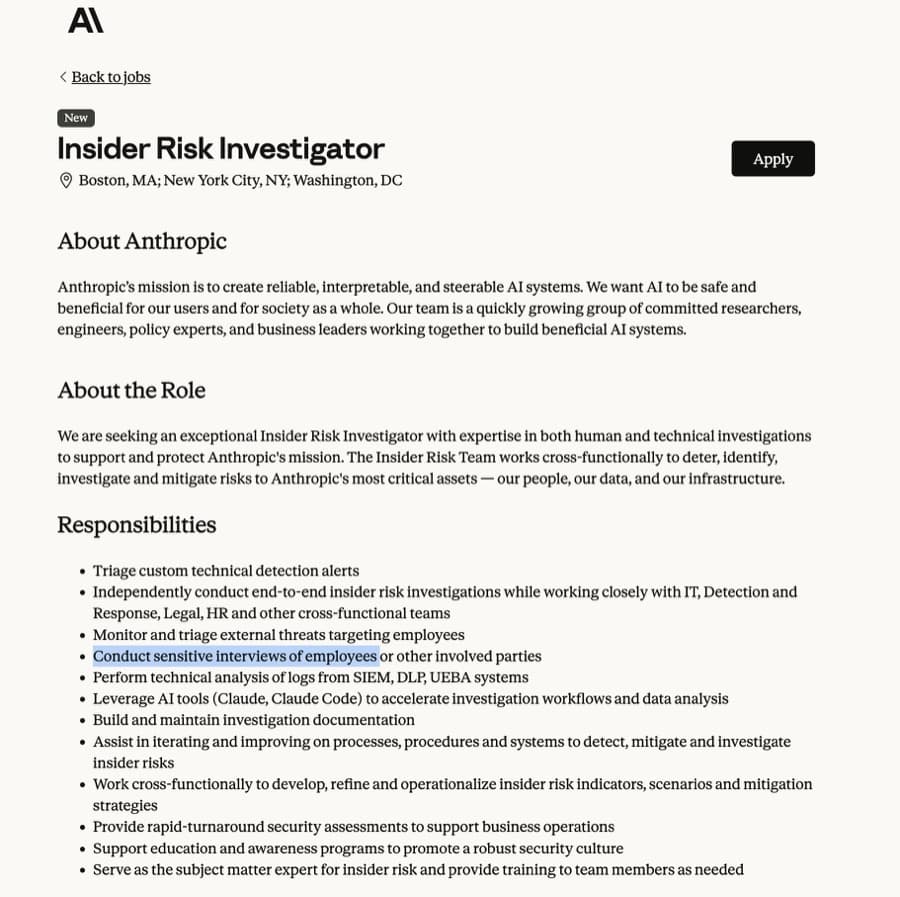
A lab that puts AI safety front and center has started hiring someone to investigate its own employees. Anthropic has posted a job for an "Insider Risk Investigator." The timing came two days after reports that CEO Dario Amodei worried that "more new hires are joining for the money."
The "Insider Investigator" Anthropic Wants: This Is the Scope
According to the posting, the role is to "contain, identify, investigate, and mitigate risks to the company's most critical assets (people, data, and infrastructure)." Specifically, it includes monitoring external threats to employees, conducting sensitive interviews, and analyzing employee activity logs with DLP, UEBA, and SIEM tools.
Candidates need experience in intelligence and nation-state threat response. One interesting line says "must be able to use Claude for investigation and data analysis." The locations are Boston, New York, and Washington, DC, and the salary is $245,000 to $305,000.
After the "Joining for the Money" Remark: Why the Internal Surveillance Debate Grew
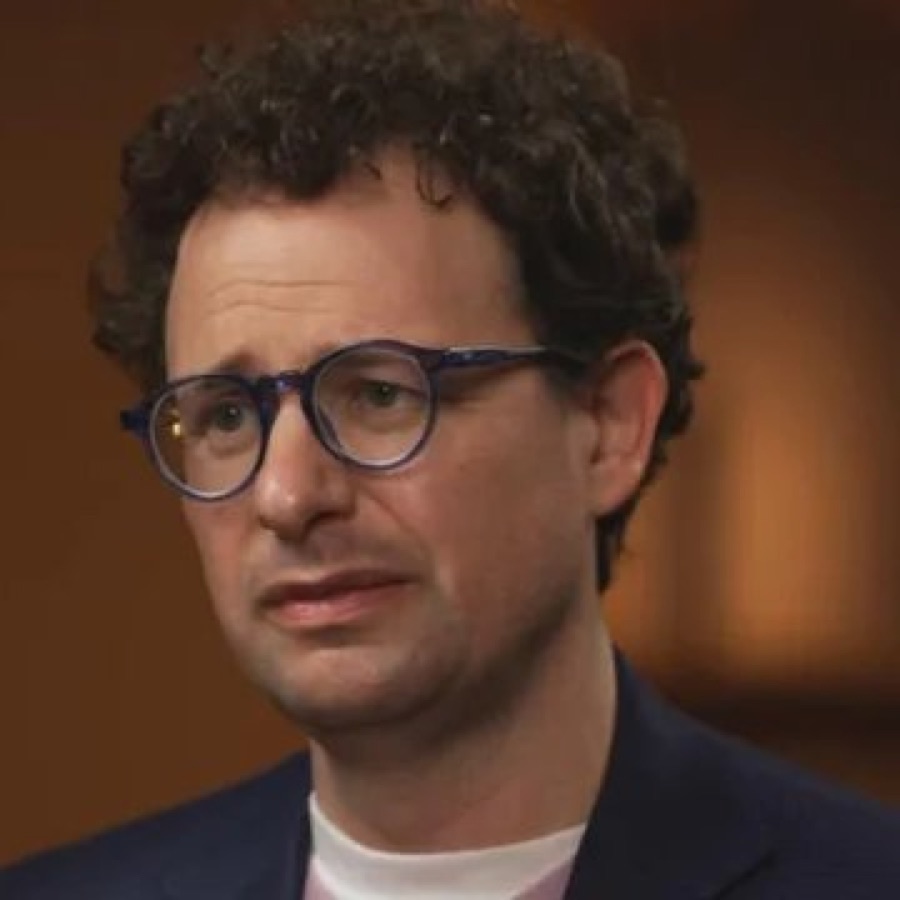
Dario's remark, reported just before, fueled the fire. He reportedly told people privately that "new hires are coming for the money, not the mission (safety)." That drew mockery along the lines of "a lab that poaches employees with higher pay than its rivals is complaining that its employees come for the money."
Indeed, Anthropic is known for some of the highest salaries and stock options in the AI industry. There are reports that some non-research engineers saw their equity value rise by millions of dollars in two years.
What the Top Salary Shows: The Price of Insider Risk
Looking at the share of employees who stay after two years, Anthropic is at 80%, the highest among major labs. That compares with 67% at OpenAI and 64% at Meta. So despite worries that "more people are coming for the money," its actual attrition is among the lowest in the industry, which is the twist.
When an AI Company Starts Watching Its People: The Questions That Remain
A frontier lab building an organization to investigate its "insiders," not just "external threats," shows that the AI talent race has spilled into a question of organizational culture. The leading reading is that the irony of drawing people in with high pay while worrying that "they come for the money" lays bare the talent crunch in the AI industry.
Related: X post