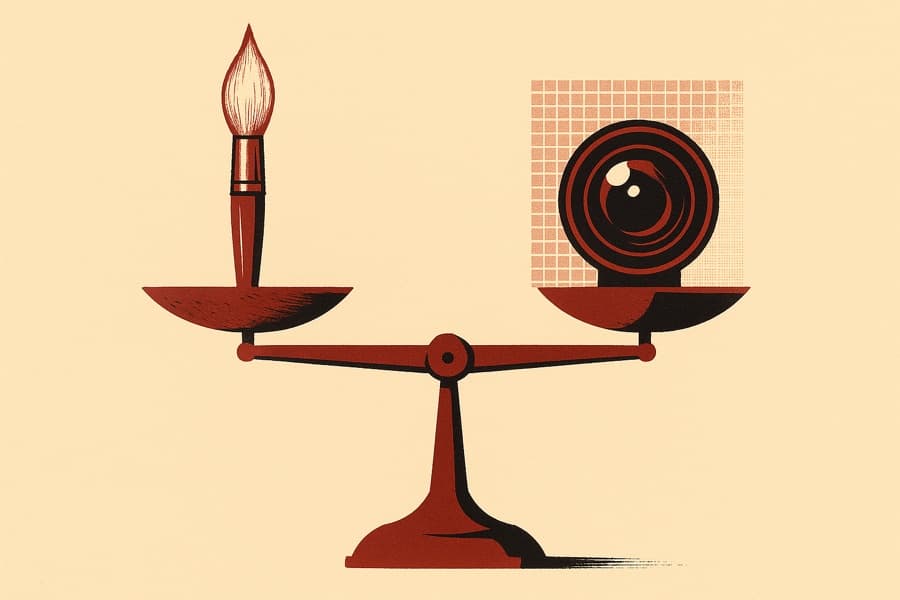
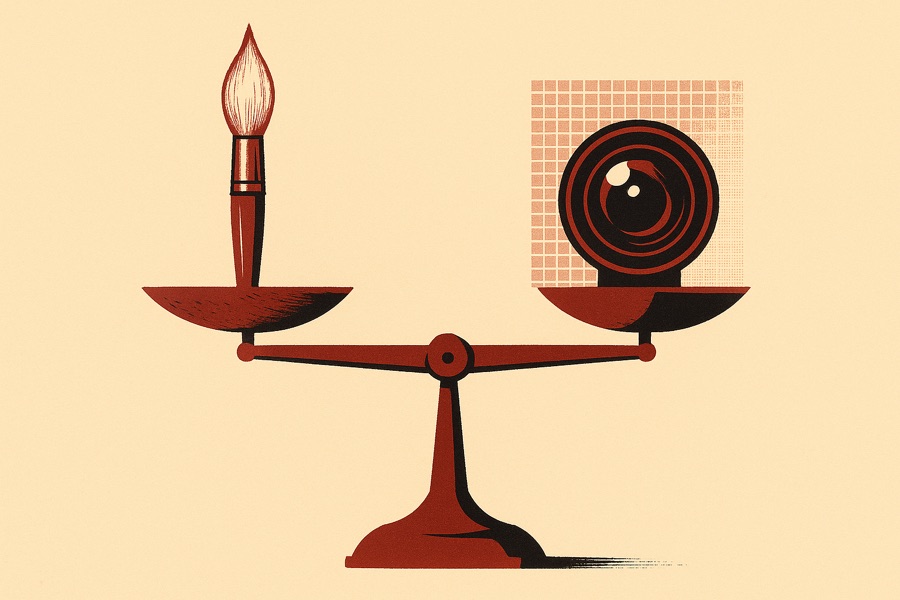
Memes are no longer "drawn." They're "made." A one-line promotion Elon Musk posted on X in early August 2026 captures that shift. "Grok Imagine can meme." It was a pitch that Grok Imagine, xAI's image and video generation feature, can produce memes. It drew 1.25 million views and 3,400 likes. (Musk's original post)
But on that same X, the opposite reading appeared. Japanese illustrator 絵描キノ裏 (@kinoura10000) replied that it wasn't drawn, it was stolen. It drew 35,000 views, 1,200 likes, and 172 reposts. (The illustrator's original post)
「grokくんが描いた」ではなく「grokに盗ませた」ですね。生成AIユーザーも生成AIテックも知財無断収集の責任逃れしか考えてない言動をしますが、これほど類似性があればどんな言い訳も通用しないでしょうね。
"It's not 'Grok drew it,' it's 'had Grok steal it.' Both generative AI users and generative AI tech companies say and do things that only think about dodging responsibility for collecting intellectual property without permission, but with this much similarity, no excuse is going to hold up."
A boast about performance and an accusation of theft. The same feature drew split reactions. Without taking a side, we set the two arguments next to each other by incident, context, and practical view, focusing on confirmed facts.
A 1.25 Million-View Promotion, With a 35,000-View Rebuttal Attached
Behind Musk's promotion is Grok Imagine's flagship feature. The recent image model Image 2.0 (released August 7, 2026) highlights a "Magic Wand" that edits only the region the user selects and leaves the rest of the frame pixel-for-pixel unchanged. One X user called it "god-tier for making memes. You swap just the face in a photo and leave the background as it is," (related summary) and Musk shared that trend in one line: it makes memes too.
But that very "partial edit" ability reads as a threat to creators. If the output is an existing illustration with the AI barely touching it and changing only certain parts, then "this much similarity" to the original stays right there. kinoura10000 aimed squarely at this point. Her argument is that when the similarity is obvious, an excuse like "we just referenced it" won't hold up.
A Pile of Lawsuits Stacked on the Meme Factory's Report Card
Grok Imagine's growth is remarkable. Reports said more than 20 million images were generated per day and that it hit 314 million visits, (related report) and xAI announced on its own that Image 2.0 ranks No. 2 globally on the Arena benchmark for image generation and editing, behind OpenAI's GPT Image 2.
But next to the meme factory's report card, a litigation record keeps stacking up.
- The leading class action by illustrators (Andersen v. Stability and others) has been running since 2023, and lawsuits against generative AI have grown to more than 60. (lawsuit tracker)
- In Getty Images v. Stability, a preliminary UK ruling treated unauthorized training as copying, and U.S. courts have shown a trend of not accepting fair use defenses. (related report)
- In December 2025, six authors including John Carreyrou sued Anthropic, OpenAI, Google, Meta, xAI, and Perplexity over training on pirated books. It's regarded as the first lawsuit to draw xAI in over training data.
- UK member of Parliament Jess Asato sued xAI, saying Grok generated sexualized images of her without permission. (Asato lawsuit)
The controversy over unauthorized training is also heated in Japan. Materials from the Agency for Cultural Affairs council describe the situation in illustration as "misappropriation of works" and include creators' views that training data is "almost 100% unauthorized use." (Agency for Cultural Affairs council materials) kinoura10000's reaction is one voice in that current.
Creators Point to Evidence, Users Point to Sources
The two arguments stand on different premises. Setting them side by side in a table makes the point of collision clear.
| Item | Musk / Grok Imagine promotion | kinoura10000 / creators' concerns |
|---|---|---|
| Core claim | "Grok Imagine can meme" — it can make memes | "Not drawn, stolen" — criticism of unauthorized training |
| Technical view | Magic Wand partial editing, frame preserved | High-similarity output is evidence of dependence on training data |
| Data issue | Not mentioned | Unauthorized collection of intellectual property, criticism of dodging responsibility |
| Public reaction | 1.25M views · 3,400 likes | 35,000 views · 1,200 likes · 172 reposts |
The practical signal for the creator's side is "evidentiary weight." There have been cases where Grok mistook a human artist's work for "AI-made." Cyberpunk illustrator Dangiuz, after Grok declared his 2019 piece an AI-generated work, pulled out a screenshot of the 2019 original to rebut it. It's an example showing that when the original and its creation date are clear, you can respond even to a misjudgment.
For the user's side, "provenance" is the key. Some of the Grok images Musk promoted were actually made by uploading photographer Charles Brooks's photo as a reference image. The photographer demanded his name and a link be shown, saying "AI couldn't have made that image without my photo." (related report) It shows that for output made with a reference image, even if "the AI drew it," the obligation to credit the original author remains.
The Meme Theft Controversy: Training Path Undisclosed
Confirmed facts: Musk promoted "Grok Imagine can meme" (1.25 million views), and kinoura10000 criticized unauthorized training on the basis of similarity, saying "not drawn, stolen" (35,000 views). Image 2.0 was released August 7, 2026, and xAI announced on its own that it ranks No. 2 globally. Lawsuits over unauthorized training are ongoing, and xAI was also sued by authors in December 2025.
Not confirmed: The specific work or image kinoura10000 pointed to couldn't be confirmed through web searches. She clearly said there was "this much similarity," but we can't identify which work resembles what, and in what way, so this article doesn't reproduce any image. Whether the output actually amounts to copyright infringement, and whether Grok used her work as training data, can't be confirmed before a legal ruling. The exact posting times of the two posts also couldn't be confirmed.
The meme factory keeps running, and there's still no answer to who pays the price. What's clear is that the better the performance, the bigger the question of "what was it made from". If that question gets buried under promotional copy, the next "stolen picture" may stop being a figure of speech.